
The Divergent Potential Blog:
Executive Coaching for ADHD, Autistic & AuDHD Leaders
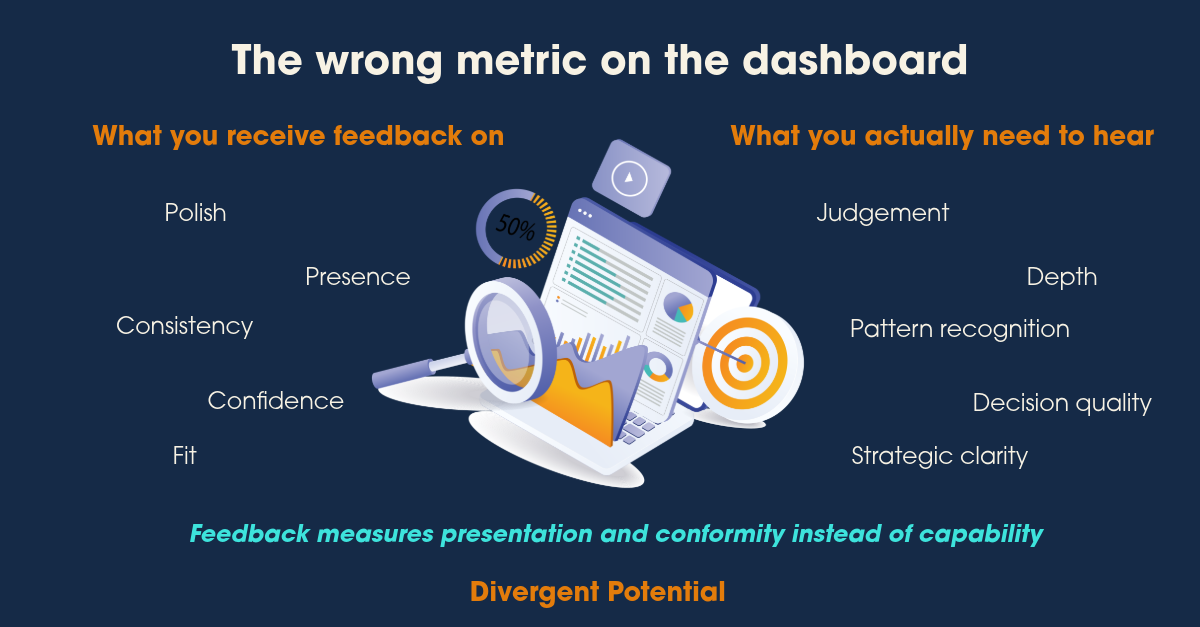
The Feedback Loop at the Top Is Broken
Senior leaders often receive less honest feedback as their role grows. For neurodivergent leaders, that gap can be older, deeper, and far more costly. Why accurate external challenge matters.
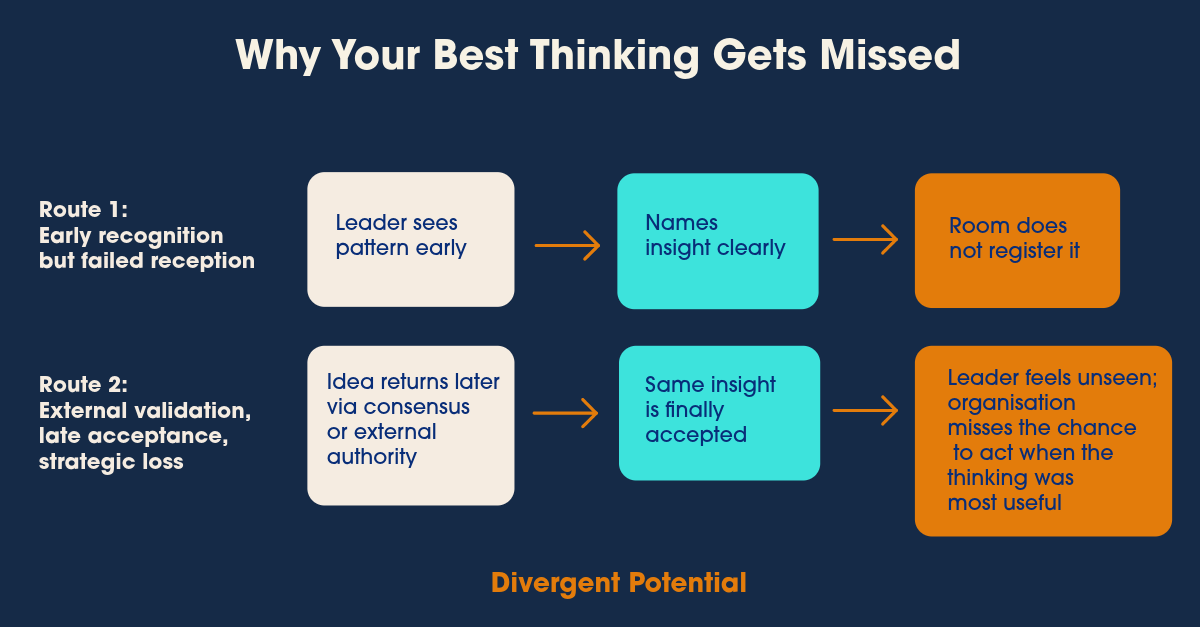
The Leader Who Sees Furthest Is Only an Asset If the Room Knows How to Listen
The meeting is forty minutes old when you say the thing.
Not dramatically. You've learned not to do that. Just clearly — the pattern that hasn't been named yet, the risk nobody's flagged, the strategic implication that everyone else in the room will arrive at eventually, once the moment to act on it cleanly has already passed.
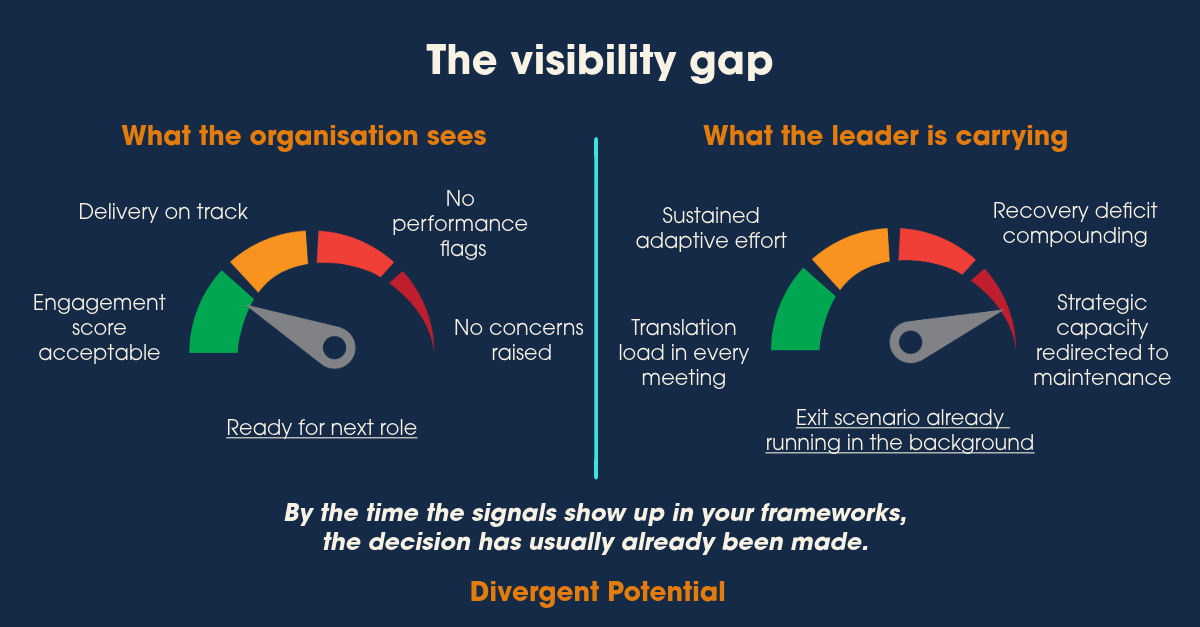
Why Your Highest Performing Leaders Look Fine, Right Up Until They Leave
The leaders most at risk of leaving aren’t the ones flagging concerns. They’re your highest performers — carrying a cost that conventional frameworks weren’t designed to detect. Here’s the business case for getting ahead of it.
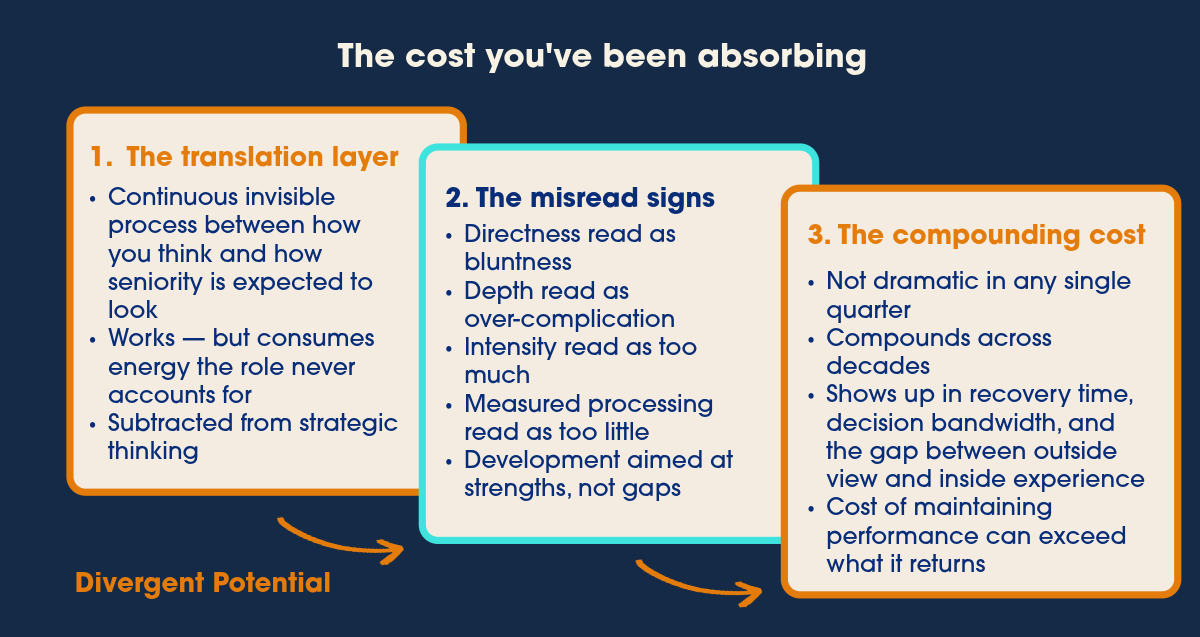
The Executive Presence Model Was Never Built for Every Kind of Leader
Executive presence has been measuring conformity as much as capability — and some of the most effective senior leaders have always sensed it. Here’s what leadership authority looks like built on authentic foundations instead.

Late ADHD or Autism Diagnosis as a Senior Leader — What Changes Next
A late ADHD or autism diagnosis can explain years of high performance at hidden cost. For senior leaders, the real question is what changes next in leadership, communication, and sustainable performance.
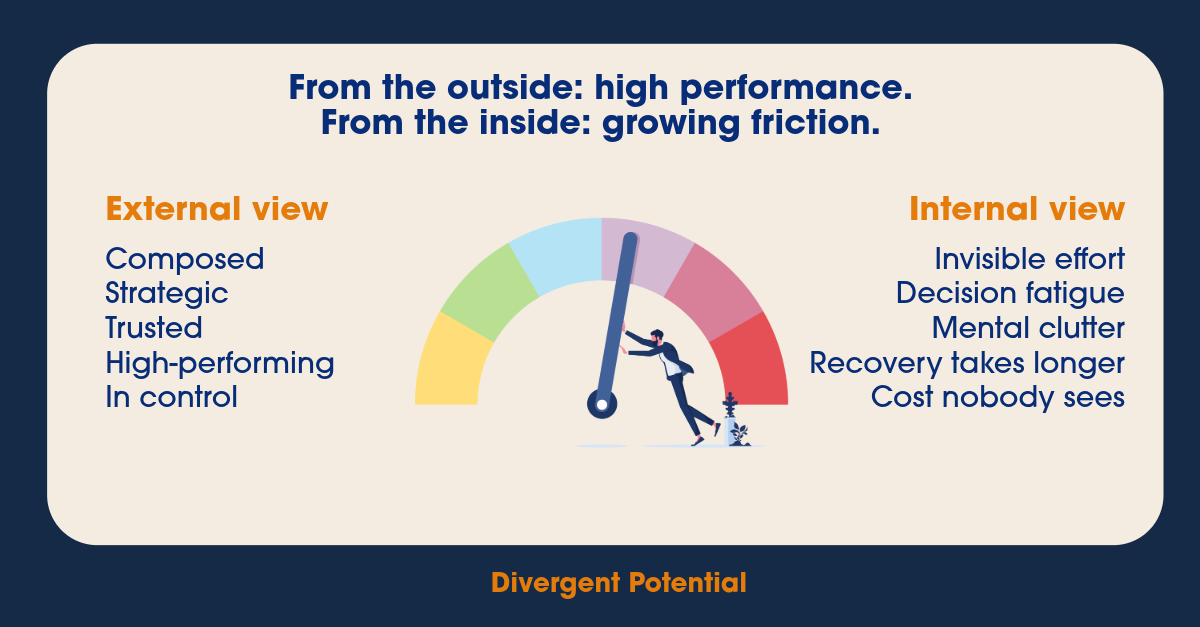
You’re at the Top of Your Game.
You’ve built the career. So why does leadership feel this costly? For senior leaders experiencing unexplained friction, executive coaching offers what the environment can’t — honest, rigorous support at the level the role demands.
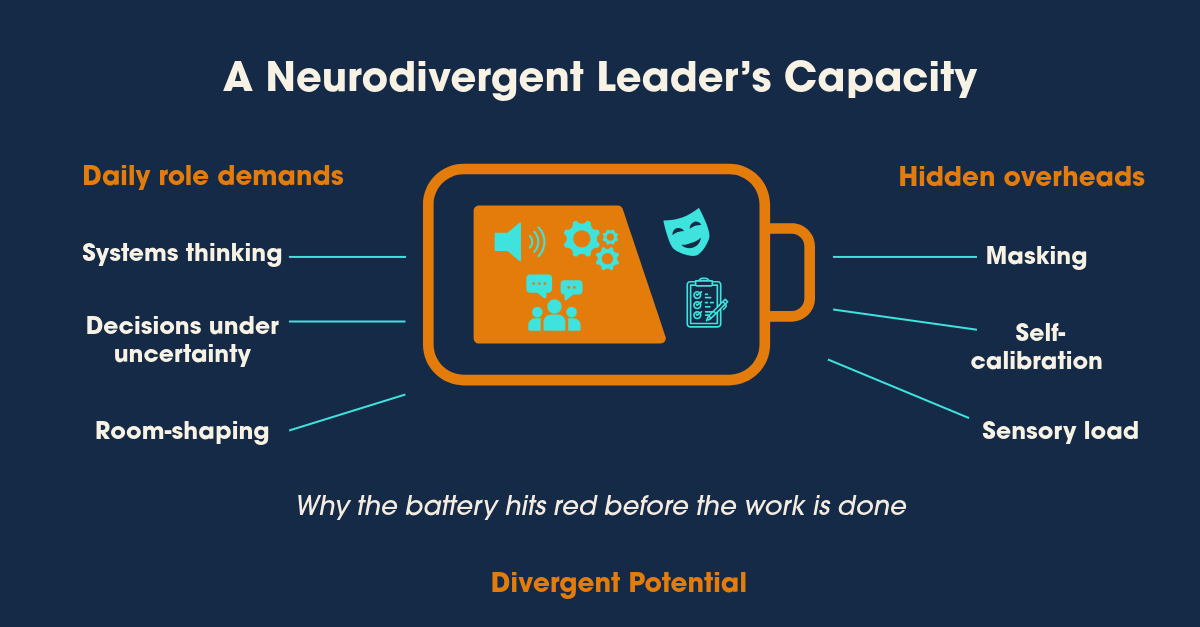
The Hidden Performance Tax on ADHD and Autistic Senior Leaders
ADHD and autistic senior leaders often sustain high performance at a hidden cognitive and emotional cost — one that never shows in the metrics. Here’s what changes when that cost is finally examined.
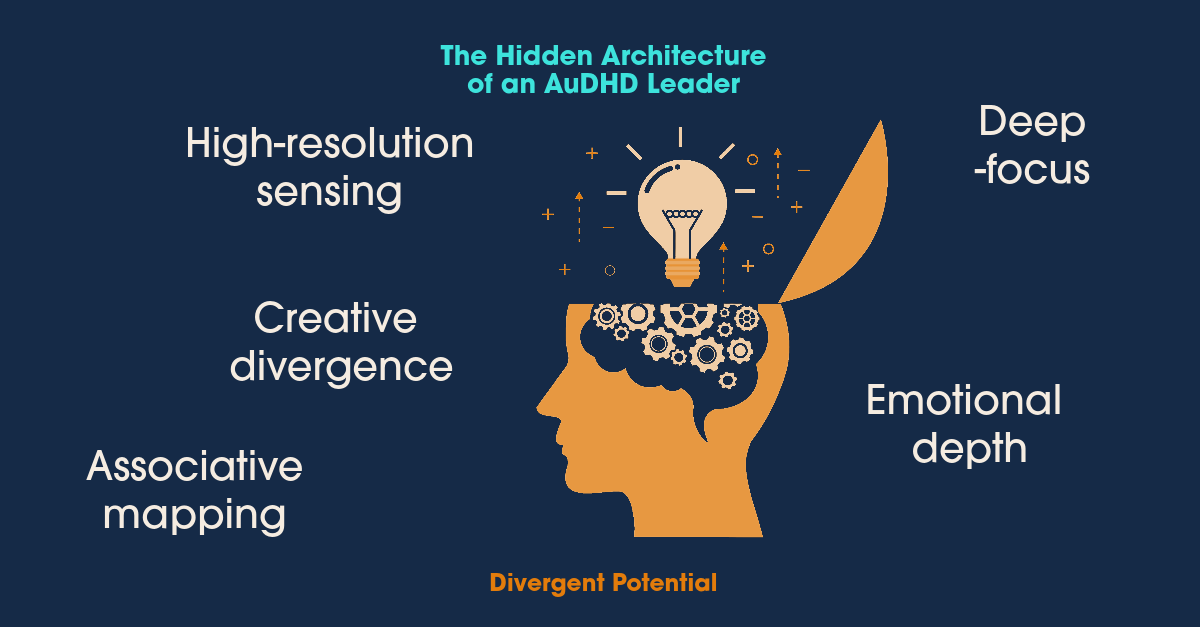
AuDHD Leadership: Understanding a Different Operating System
Over years of coaching late-diagnosed AuDHD professionals, I've found that the traits most often framed as problems — the intensity, the pattern recognition, the unconventional thinking, the emotional depth — are frequently the same traits that made them exceptional at what they do.
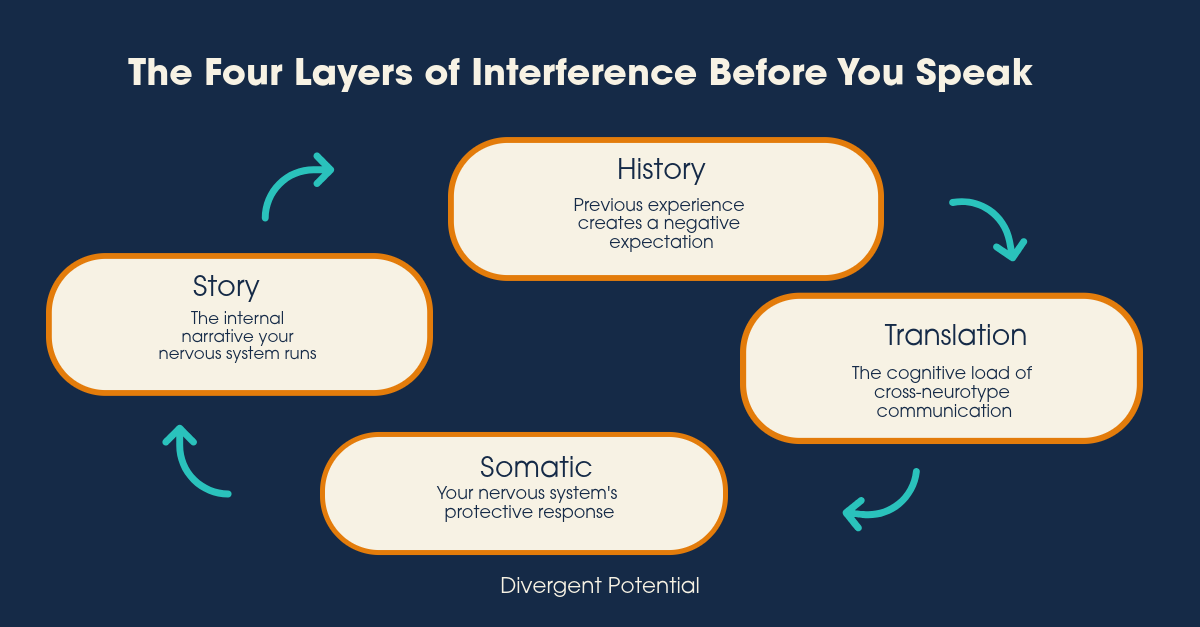
Neuroconvergent Communication: Why Neurodivergent Leaders Underdeliver in High-Stakes Conversations
Most professional communication assumes a shared operating system. Same inferential shortcuts. Same social norms. Same instinctive reading of tone, pace, and subtext.
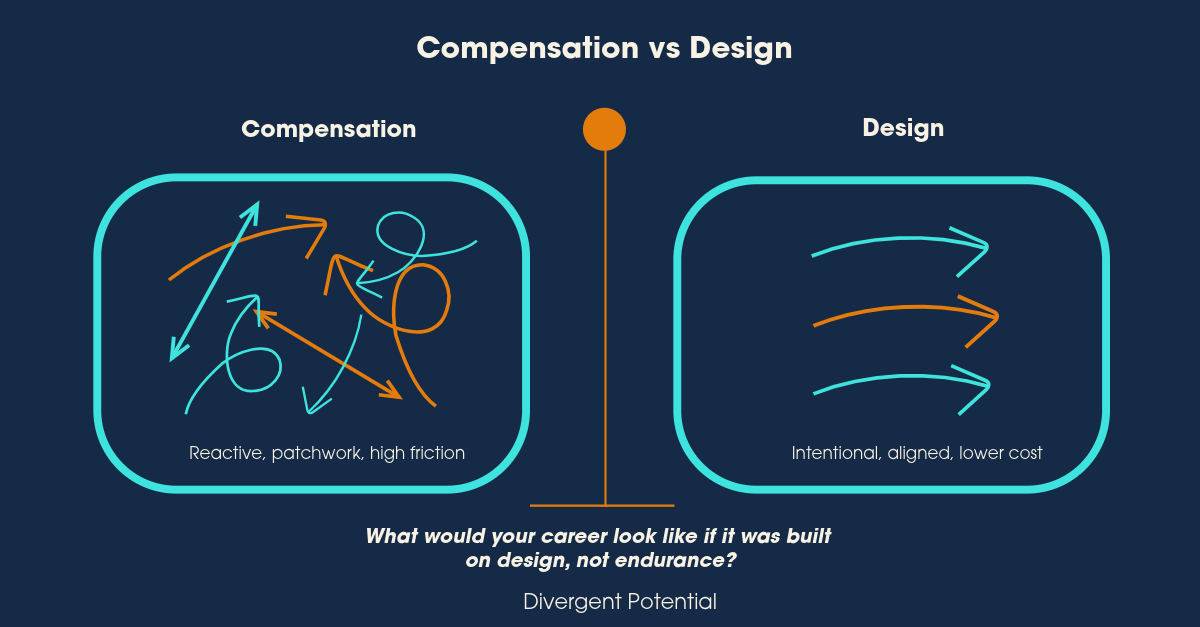
Executive Leadership After a Late ADHD or Autism Diagnosis: What Changes Next
You didn't get to senior level despite how your brain works. You got there because of it. The diagnosis doesn't change that. It just changes what you build on.

Recognising AuDHD Burnout as a Late-Diagnosed Senior Leader
Late-diagnosed neurodivergent burnout isn’t a failure of resilience. It’s a systems incompatibility.

Workplace Inclusion: Neurodivergent Lessons from Invisible Conditions
What an invisible condition taught me about neurodivergent professional success — and what organisations consistently get wrong.

Reactive Creativity: The Untapped Neurodivergent Advantage
Neurodivergent professionals don't lack planning skills — they have a different and often more effective relationship with action. Here's why reactive creativity is a leadership asset

The Neurodivergent Nervous System: ADHD, Autism and Empathy in Leadership
For ADHD and autistic professionals, the nervous system isn't oversensitive — it's differently calibrated. Understanding the biology changes how you lead.

Neuroconvergent Thinking Part II: How Neurodivergent Teams Drive Better Results
When organisations stop managing neurodivergent difference and start deploying it strategically, team performance changes. Here's what that actually looks like.

Neurodivergence as a Social Construct: Workplace Inclusion for ADHD and Autism
Neurodivergence isn't the problem. Workplace systems built for a narrow definition of normal are. Why the barriers facing ADHD and autistic professionals are structural, not individual

Neuroconvergent Thinking Part I: How ADHD and Autistic Thinking Drives Workplace Success
Every brain has access to diverse thinking modes. The question isn't whether someone is neurodivergent — it's what environments allow ADHD and autistic professionals to think at their best.
Monotropism: How Autistic Focus Works and Why It Matters in Leadership
Monotropism explains why autistic professionals focus the way they do — and why that focus, properly understood, is one of the most powerful cognitive assets in senior leadership.

Supporting Autistic Professionals: A Guide for Workplace Managers
Managers who genuinely understand autistic professionals don't just include better — they lead better. A practical guide to moving beyond accommodations into real support.

AuDHD in the Workplace: Unlocking Dual-Neurodivergent Strengths
Two neurotypes. One nervous system. One professional life. What AuDHD actually means in the workplace — and why understanding it changes everything about how you lead.